Clueless Cabin Construction
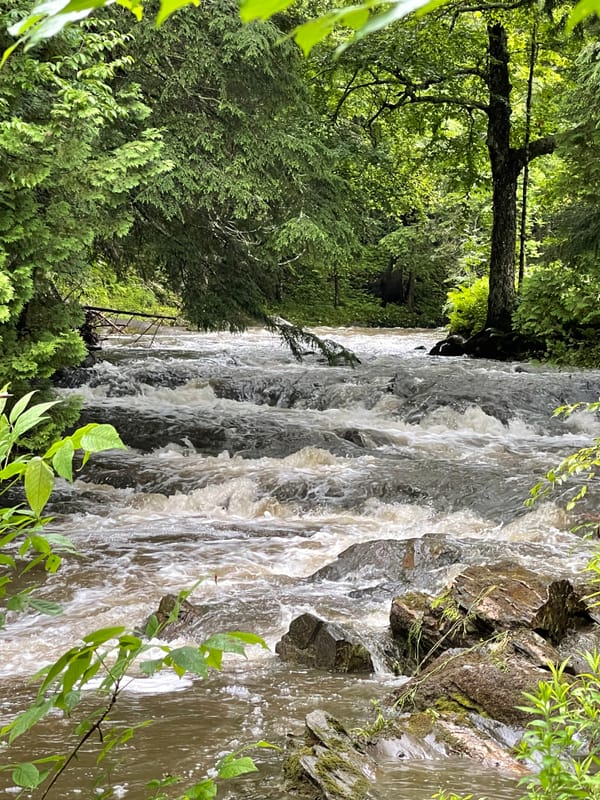
These days, building a simple cabin by the river is just not that simple. Add in rules and regs for water, and you might just want to build as far away from the river as you can


The American (Canadian, Australian, insert your country name here) Dream is a cabin by the river. If not as your permanent home, then as a place of refuge, a place for healing, alone-time, family time, a holiday, a vacation away from everything.
Boy were we clueless! Building today, especially in environmentally conscious Vermont, there are many, many rules and regulations for building, and even more when building next to water. I don't know where this cabin is located in the above picture, but FEMA doesn't allow anyone to build in a flood zone in the United States.
There are so many complexities when building by the water in the USA. Government (FEMA), legal and physical difficulties are so complex and restrictive that our local zoning administrator said, "I would never own property on or near water in Vermont, the restrictions are too much for me."
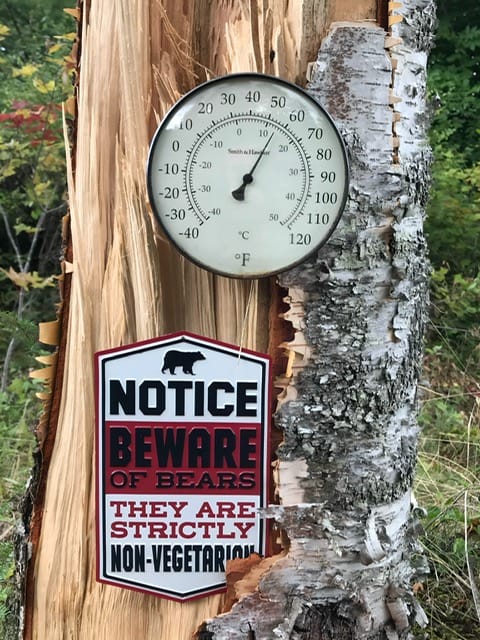
There is a very short window to build in Vermont, as the weather limits what we can build as the ground freezes solid. A last minute FEMA delay can cost you the ability to build in the season. You can't stay year-round in your RV, because your black tanks will freeze solid into poopcicles.
Yet that is EXACTLY what we did, my wife Sheri and I bought property on the water, specifically at the headwaters of the Winooski River, in north-central Vermont, at the southernmost point of the Northeast Kingdom, also known as NEK. Our plan was to build a cabin across the river from family. This is our story. Looking back, it is our clueless story.
Yes, we were cluelesss to zoning and building complexities when we asked to purchase part of the farm from my wife's parents for almost fifty years.
We were clueless as to construction in the far north, both of us being newlyweds (at 59 and 65 yrs old) and very experienced with non-basement concrete pad construction in the south. Well Sheri and her first husband, Big Gary had owned houses in the southeastern US with no basement experience, and I had owned a few different homes in Florida, and at the time of our building, together Sheri owned a home on a creek halfway to downtown, and I had a row-townhouse off Monument Road, both in Jacksonville, Florida. But let's move the story along here ... this is all about our northern Vermont cabin build.
Verde Mont - Vermont - 1791
When you are on the New York side of Lake Champlain, which runs north to south between Vermont and the Empire State, there are no visible big mountains, just a horizon filled with low hills. Those hills are the green mountains, so named by the French who traveled south from Quebec and Montreal to farm in the Verde Mont (Vermont). In the early days, New York state extended east to the Connecticut River. Sandwiched between New Hampshire to the east and New York to the west, and the Canadian border in the north and Massachusettes to the south, Vermont became a state after the original 13 colonies. In fact, Vermont is NOT one of the original 13 colonies, because it was carved from New York land.
We all got to Vermont by way of Sheri's step-father. He was born and raised in upstate New York, across from Lake Champlain and Vermont. The two states have always had a symbiotic relationship, in fact Vermont was carved out from land originally platted as New York State. We now go back 40 years or so, when Sheri, her first husband Gary Leighton Chronister (Big Gary), and her parents bought the property, or before that, when her step-Dad retired from the Navy and her parents moved from Jacksonville Beach, Florida in 1972 to south-central Vermont. It was a dream to retire in Vermont, and the parents, along with younger siblings in tow, made the move up north.
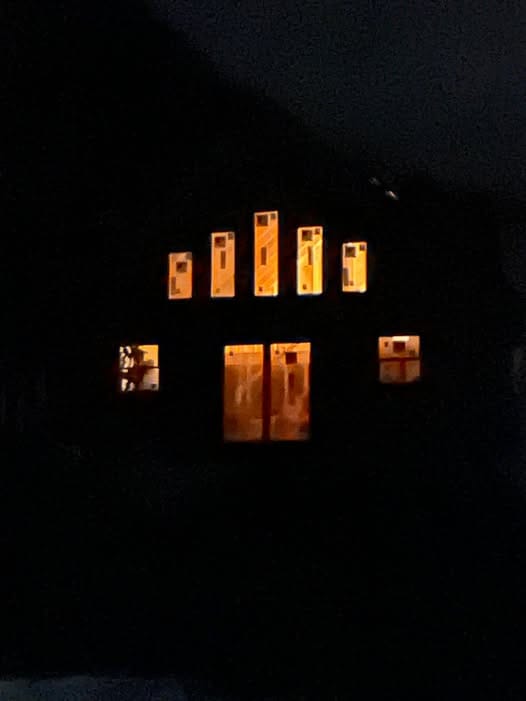
Cabot, Vermont and MapleCrest Farm - 1874
The original home at the turn of the river, as the Winooski turns toward due south was MapleCrest, built on the flat land on the southwest side of the river. The valley floor south of town stretched out toward Cabot Flats and the river meanders to and fro, with the occasional oxbow. There is enough drop before Cabot Flats, in what is now south Cabot, to allow the area's only sawmill, which last operated more than 100 years ago. The remaining race and mill wheel bearings finally were destroyed in the Flood of 2023.
At the head of the valley, before the rise up the hill into town, and Cabot Creamery, lies MapleCrest. The original 100-acre property extended from the rich, arrable flat bottom land up northward into the foothills and on both sides of the river to the gentle turn of the Winooski, out and back. The large yellow farmhouse with white trim was built in the colonial style as a large two-story farmhouse, with a full-size basement. You can see the homage to Victorian construction as you round the corner as catch a glimpse of the manicured gardens and if you look hard enough, you'll see the name M A P L E C R E S T in stones on the bank in front of the house.
Situated 150 feet back from the river on a slight 20 foot rise, the home can be seen sideways on as you approach from the south, along with low outbuildings holding the wood-fired boiler, the wood storage, tractor garage and on the rise up to the forest, the sugar shack. The house proper is parallel with the river, and there used to be a very large barn to the north, but it burned down in the 1990's. At MapleCrest, the road, Vermont 215 curves sharply to the right and crosses a concrete abutment style single span bridge.
Inspection will show the bridge is aging.
Its not until you put together some form of family history that one realizes we are missing photos of MAPLECREST, and some history about the sisters who owned the property before the family.